Cycling Europe: Bikepacking Estonia’s Coastline

On a bikepacking trip to Estonia, Amy McPherson finds an intriguing coastline with amazing beaches, Tchaikovsky, traditional Baltic architecture, windmills, meteorite craters and long stretches of solitude.
There’s an almost infinite number of long-distance cycling routes across Europe, with the EuroVelo system being the backbone and helping make many perfect bikepacking trips possible.
Estonia isn’t the first thing on a tourist’s mind when it comes to European cycling holidays; most make an obligatory visit to Tallinn just to show they’ve ‘done’ it, then depart on the next ferry to Finland.
The thing is, Tallinn is just one dot on the map, and without venturing outside the modern comforts, you’d be missing out on the real gems its 500+km of coastline offers.
Tallinn to Haapsalu
I had arrived in Tallinn without a bike. However, the friendly team at City Bike Tallinn had an answer for me. They offer bike rentals with bikepacking packages where you can hire the bike complete with saddle bags, leave your luggage at the shop and simply push off. They can plan your itinerary and book hotels for you as part of the package, so all you have to do is follow the signs and make sure you catch the right ferry between the islands.

Don’t get me wrong. Tallinn is a beautiful city. But once I’ve seen the castle, walked its cobbled streets and wrestled the day-trippers from cruise ships, I was eager to get out.
I had five days, and the plan was to make it from Tallinn to the islands along the coast. The entirety of the Estonian coast cycle route, including the islands, is part of two EuroVelo routes, so it is well sign-posted, which meant that in the four days of my trip, I hardly referred to the GPS outside the city.

I had not expected it to be so easy. Bike lanes crisscross the city as I navigated them to get to its edge. Having found my way away from the hustle and bustle, the laneway took me through a pine forest, and I eventually emerged to wide open roads of the countryside.
My destination for the first night was Haapsalu, 150km away. I had the whole day, so I took my time. Which was just as well. This stretch of the coast was an introduction to what was yet to come – a glimpse of the white sandy beaches that are void of people. I stopped at a couple for photo breaks to test the waters. Too cold for my Aussie feet, so I pushed on.
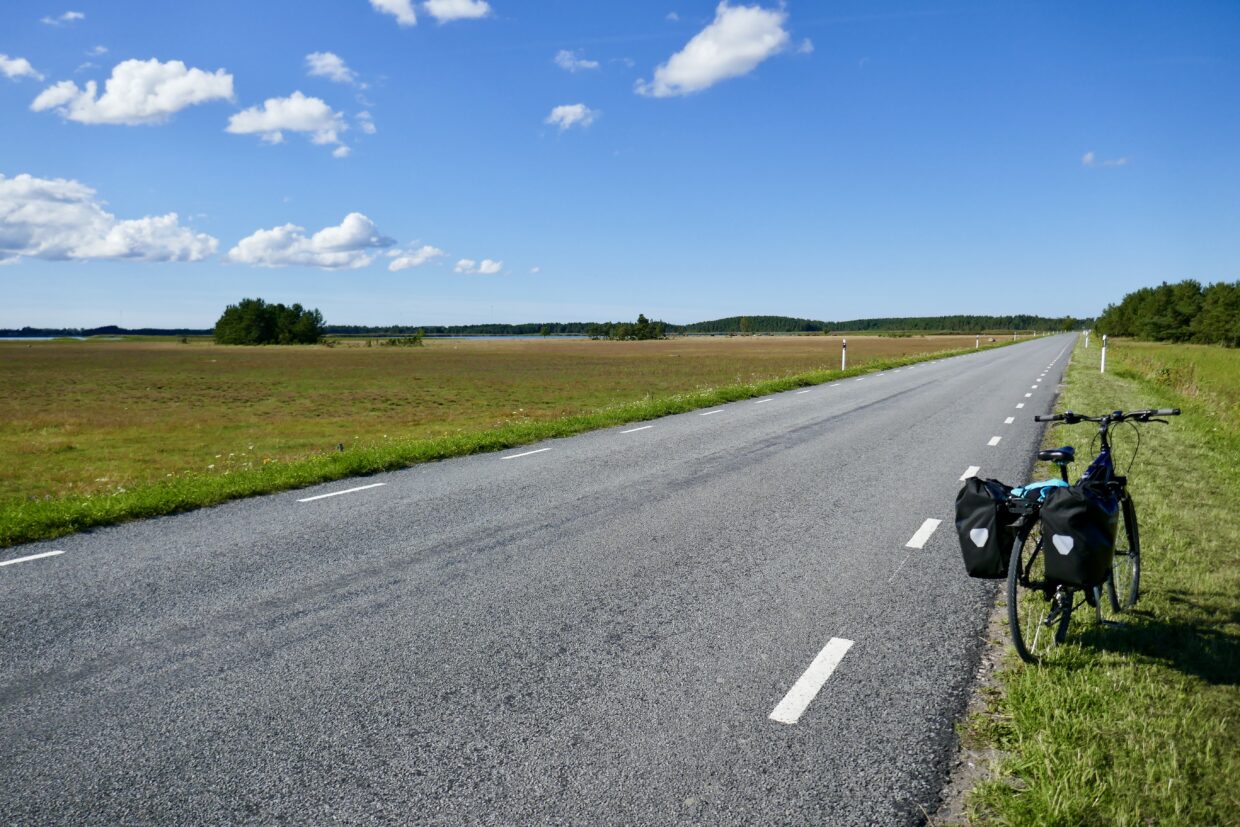
Ah, what serenity. The number of cars drastically decreases the further you ride from Tallinn, yet the cycle lanes keep going. With less than 1.5 million people in the whole of Estonia, most of whom live in cities like Tallinn and Tartu, the remaining spaces of this beautiful country are naturally quiet. I happily pedalled along the excellent cycle way that followed the only road along the coast, flanked often by pine forests and farmlands. Although my first day was a long journey, it was easily the most relaxing riding I’ve ever done.

From the coast, I found my way to a trail converted from an old rail line and arrived in Haapsalu by the old train station, which is now an open museum of old Soviet trains and heritage station building. By the time I found my hotel, it was pushing 8 pm. Thankfully, the sun doesn’t set until 10 pm during the summer around this part of Europe!
Haapsalu to Hiiumaa
The next day, I had the morning to check out Haapsalu, a quiet little place that was perfect to explore by bike before I rode to the ferry terminal.
Russian composer Tchaikovsky loved this town, and there is a memorial bench on the promenade where he used to sit and contemplate his compositions. I sat on the bench for a little while, hoping to find a muse in this spot of inspiration. The bay’s water is still and mirror clear, and I am quickly absorbed into its magic. Before long, it was approaching ferry time, and I had to go, but not before a quick turn around the main street lined with traditional wooden colourful houses with very few people about. No lingering though – the ferry harbour was another 10km away!

I made it to the harbour just as it was sailing in, where a couple of buses, an ambulance and cars were waiting. The sailing was glorious, and I ate a light lunch of meat pastry and coffee from the canteen. The trip to Estonia’s second largest island took an hour and 15 minutes. I wasn’t the only bike rider on board. I spotted and waved at another bike packer as the ferry docked.
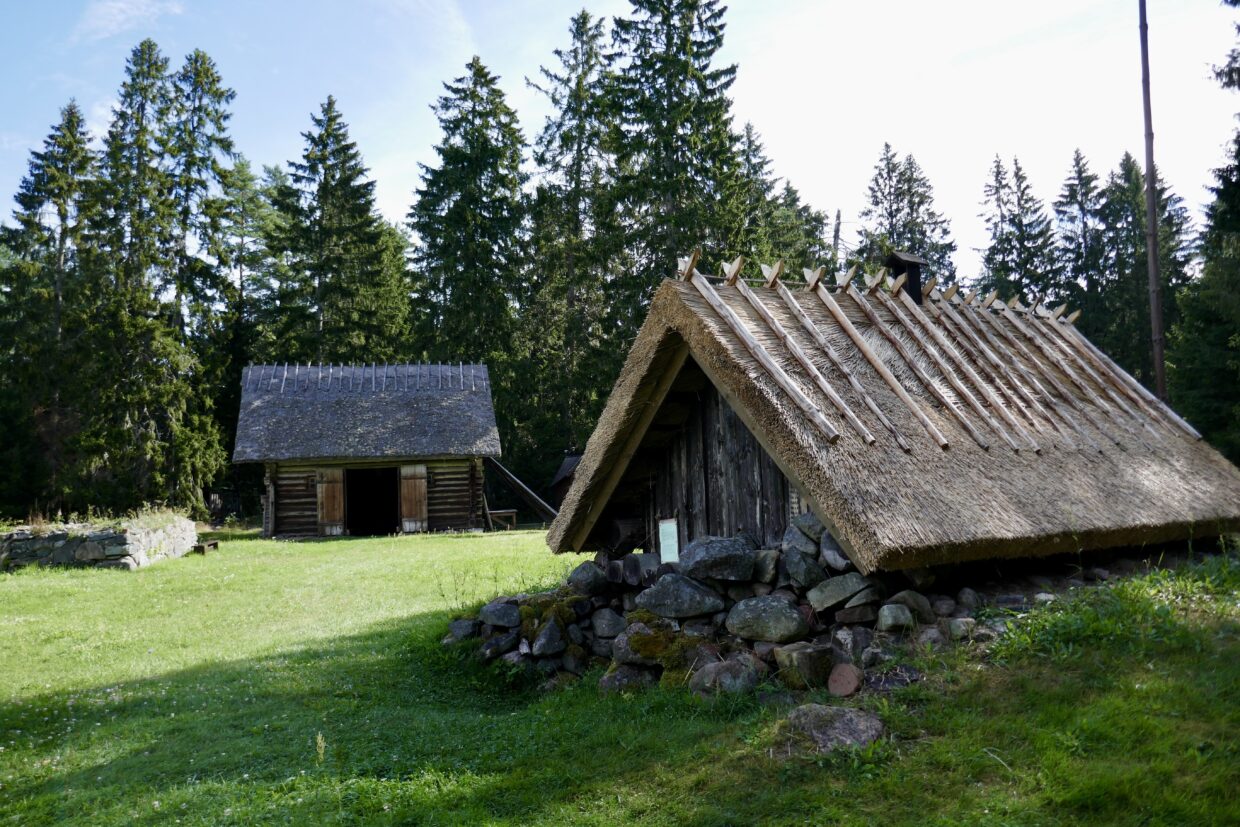
Much of the riding on Hiiumaa island is along roads that cut across forests, farmlands and occasional marshland nearer to the coast. Seabirds are common sights in the sky, so are traditional wooden churches and windmills, which are very much part of the Estonian island landscape.
Hiiumaa is a UNESCO Biosphere Reserve and claims to have no noise or light pollution. What it does have along its coast is a meteorite crater by the island’s only town, Kärdla, where I had stayed the night, and the Baltic’s oldest and tallest lighthouse, the 500-year-old Kõpu lighthouse.

I bedded down in a family guesthouse for the night, after spending some time in an open-air museum of traditional Estonian life with wooden houses half buried in the ground that are blackened with age, buy a jar of potato spice from the gift shop, then was very randomly asked by the lady, “have you seen our Eiffel Tower yet?” She told me, as a joke, that it’s a must-see on the island.
I made a mental note of this for the next day, when I headed in the direction she was pointing and found the fake Eiffel Tower, which turned out to be a children’s theme park. Ah, the adventures one must have!
Saaremaa and Sõrve Peninsula
From Hiiumaa, it was another ferry trip to Saaremaa, Estonia’s largest island and part of the UNESCO Man and the Biosphere Programme, which meant it is another destination of natural beauty and wildlife, in particular birds. There must be something about these coasts that make birds want to linger – twitching is a popular pastime here. Cycling along the coast, I see several birdwatching towers erected by the shore, and at one point, I was given a stunning display of chatter as a flock of birds flew by.
On Saaremaa, I took the shortcut of going north to south by the inland rather than the official coastal way because there were a few things I saw in my guidebook I’d like to check out.
First on the map is the Angla Windmill Park and Heritage Centre. Here, I was introduced to the historical use of windmills on the islands, then more farmlands, avian flocks and churches. Later, I found myself in the most intriguing sight of all.
It’s not just natural and historical attractions that lure visitors to this extraordinary island. In the town of Kaali, just as it had in Hiiumaa, it was hit by meteorites, and not just one, but many!
What makes this place so special is that it was hit by nine meteorites around the Bronze Age. These created lakes were seen as unnatural at the time and were said to have been used for sacrificial rituals, creating an impact not just to the crust of the earth but also to the culture of its people. I locked my bike up and took a walk around the craters and the woodlands surrounding them, at last finding some fellow tourists to chat to.
We all stayed in Kuressaare, the southern town of the island famous for spa hotels and seafood, where fish caught in the morning is on the table for lunch. The skyline of the town is dominated by a sturdy castle which doubles as a museum and the pretty old centre is a delight for a walkabout after a days cycling.
I had one more day to cycle the Sõrve Peninsula. It was a 100km round trip, and by now, my legs were jelly and were hurting. Refusing to miss out on this epic day out, I carried on, fuelled by the morning coffee and stubbornness. The peninsula is lined with pebbled beaches with skilfully stacked stones and plenty more birds to gawk at. What a day, and what an epic end to my trip. At the bottom of the peninsula, at the southernmost point of the island, I enjoy a coffee and a cake at the café and take a few selfies before my return. There were a few bumpy roadwork surfaces to navigate this time, but that didn’t take away the joy of adventure I’ve had.
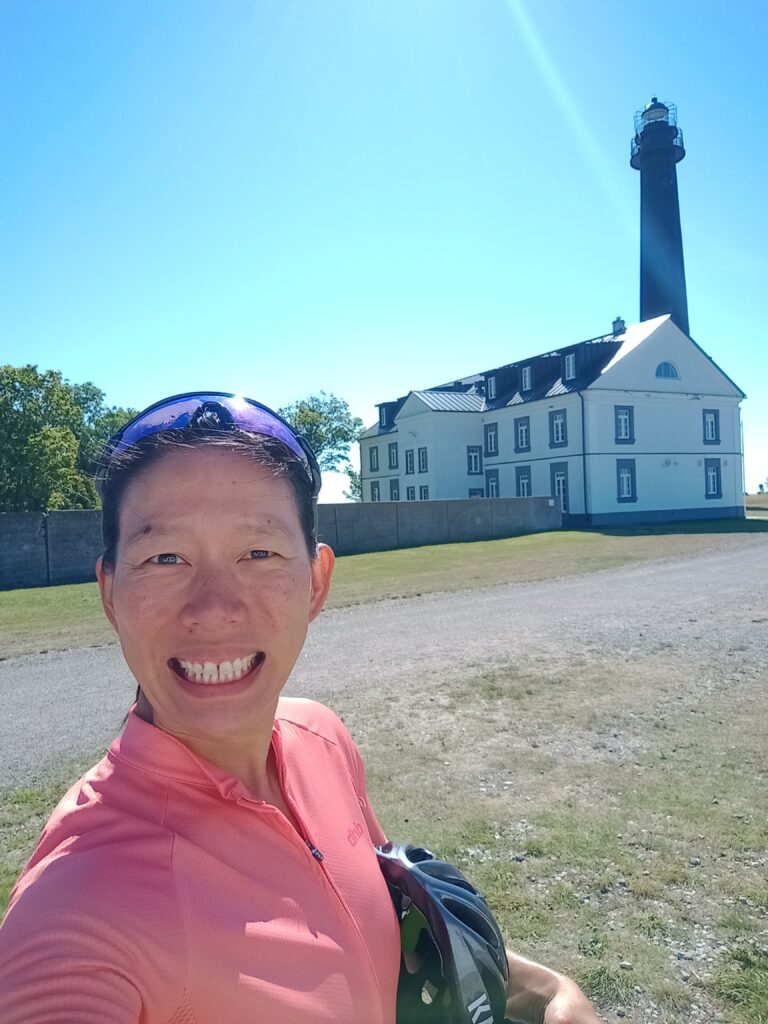
The best thing about the bikepacking package was that they had an agreement with the hotel that I could leave the bike there without riding all the way back, as I didn’t have more time to spend in Estonia on this trip, and I could catch a bus back to the capital. By now, I had a belly full of seafood, a heart full of adventure and a head full of stories to tell.
“I can tell you had a good time,” said the proprietor as I returned to Tallinn and walked into the shop to collect the bags I’d left there. “I see it from your big smile,” he added.
Additional Info
In Tallinn, you can rent your a bike from City Bike Tallinn and check out their self-guided backpacking packages. Full details at www.citybike.ee
Learn more about the EuroVelo cycle routes in Europe at www.en.eurovelo.com