Lessons From Europe: What Australian Cities Can Learn From Paris

Over the past decade or so, Paris has undergone a remarkable transformation. From a notoriously congested, badly polluted and frustratingly clogged city, it’s rapidly becoming one of the world’s most bike-friendly urban areas.
There’s less traffic, more bike infrastructure and a surprising number of commuters crisscrossing the glorious river city morning, noon and night. The reason? A lot of it comes back to the vision, focus and dedication of the city’s Mayor, Anne Hidalgo.
Elected in 2014, Hidalgo’s agenda was clear from the start and has since been whittled down to just two sweet words – ‘Plan Vélo’.
Under Hidalgo’s leadership, over the past decade, Paris has gained over 1,000 new kilometres of dedicated cycling infrastructure including the now-famous ‘Corona pistes’ – pop-up bike lanes created during the COVID-19 pandemic that later became permanent due to overwhelming public support.

A Family Connection
With my brother a longtime resident of Paris, I’ve been fortunate to witness first-hand this decade-long transformation. Annual trips have become more enjoyable and important; my bro and his partner now have two little bike-mad boys who love nothing more than getting out and about on two wheels.
From those first few wobbly balance bike rides along the bruised and battered hallway to roaring alongside the Seine on mini MTBs – these lucky little kids are growing up in a far more bike-friendly Paris than many of us would have ever imagined.
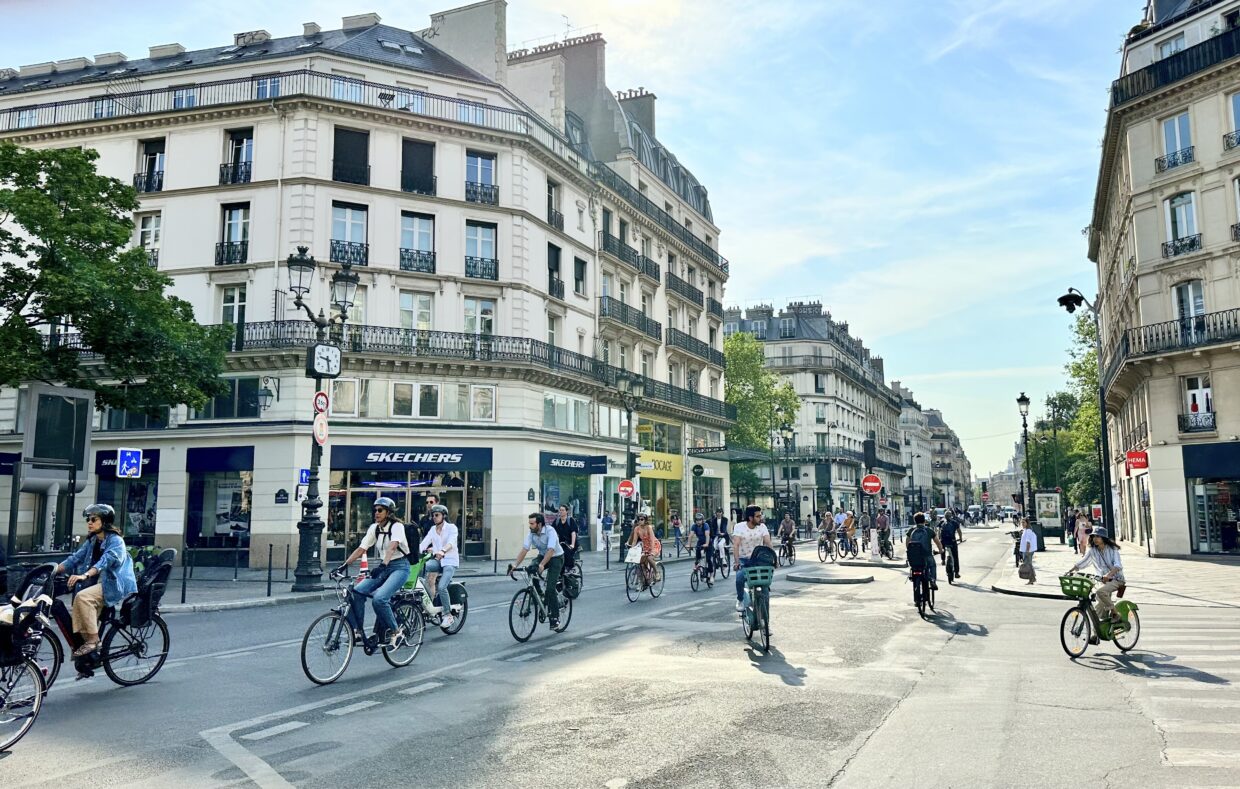
Visiting once or twice per year, I’m astonished by just how bike-friendly this former perennially polluted place has become. Morning or afternoon cross-city commuting – once deemed a risky ride – has become a blast. More like a peak-hour peloton, bikes way outweigh cars on the more popular routes. An example? Boulevard Sebastopol, where a live camera online counter shows an average of 5,000 bikes passing per hour.

The Changes
Once notoriously gridlocked and filled with blasting horns, routes such as the Rue de Rivoli have been reimagined as bike-first corridors. Entire sections of the Seine’s riverbanks, once idle with traffic, have been pedestrianised and opened to riders, rollerbladers and walkers.
Beyond bike lanes, Hidalgo introduced city-wide initiatives such as ‘Paris Respire’ (Paris Breathes), a program that closes streets to cars on weekends.
This is on top of the French government’s ‘Crit’Air’ scheme – colour coded car windscreen stickers ranging from Crit’Air 0 (green) for electric vehicles to Crit’Air 5 (dark grey) for diesel cars.
From January this year Crit’Air 3 vehicles – older, more polluting models – were banned across Greater Paris on weekdays, joining Crit’Air 4, 5, and non-classified cars already restricted. While weekend exemptions and limited 24-hour passes for occasional drivers offer some flexibility, the message is clear: the car is no longer king in Paris.
Instead, cycling lanes, pedestrian zones and green transport are taking centre stage, including the expanded Vélib bike-share system, making cycling accessible to more residents and visitors.
While these measures faced fierce opposition from car lobby groups and some business owners, public opinion has gradually shifted in Hidalgo’s favour, especially as Parisians witnessed reduced air pollution, calmer streets, and a resurgence of urban life at the local level.
Her re-election in 2020 further cemented the public’s endorsement of her pro-cycling agenda.
The Quarter Hour City
It was then, in 2020, that Hidalgo proposed her “ville du quart d’heure” concept – the idea of a quarter-hour city.
Working closely with Sorbonne professor Carlos Moreno, the pair fronted the media to discuss Paris moving into a post-vehicle era.
“We need to reinvent the idea of urban proximity,” Moreno said. “We know it is better for people to work near to where they live, and if they can go shopping nearby and have the leisure and services they need around them too, it allows them to have a more tranquil existence.”
Hidalgo said Paris was primed for an “ecological transformation” – a 21st-century transition into a city with less pollution and stress, and one that offers a better quality of life for residents and visitors.
“Paris is a city unlike any other … it is independent, lively, vibrant. It is capable of inventing a new history without forgetting its past,” Hidalgo added.
With 6-year mayoral terms, an election is due in 2026, and despite her tireless work that has also included banning rental e-scooters and the tripling of parking fees for SUVs, Hidalgo says it’s time to pass on the baton.
“I will not run for a third term. It is a decision I made a long time ago,” she recently said. “I have always believed that two terms are enough to bring about profound change.”
“Ten years ago, who could have predicted that bicycles would take over cars,” the city’s deputy mayor in charge of transport, David Belliard added. “There’s still a lot to do but this is a first victory.”
In one of her final referendums as Mayor, in March this year Paris residents were asked if 500 more city streets might be closed to cars, with pedestrians, and bike riders given priority.
The outcome? More than 60% voted yes!

Paris By Bike – The Numbers
Today, Paris stands as a model for other global cities looking to pivot toward a future less reliant on cars. It offers a first-hand lesson on how strong leadership and smart investment can reshape the urban landscape.
Surely Australian cities can learn significantly from these past, future and present stats from Paris – particularly considering our climate, clogged streets and conditions.
- Between October 2022 and October 2023 bicycle usage in Paris doubled.
- In 2024, 11.2% of trips within Paris were made by bicycle, surpassing car usage at 4.3%. Back in 2010, bike-based commuting accounted for just 3% of trips.
- During 2025 peak hour travel, bike riders account for 18.9% of trips, while car usage has dropped to 6.6%.
- Since 2014, Paris has added 300 km of bike lanes – a 35% increase in bike-friendly streets across the city.
- Paris recently ranked first in Cycling Industries Europe’s bike-sharing benchmark study.
- There are 19,000 Vélib bikes in circulation, with 40% of them electric.
- These bikes are part of the Vélib’ Métropole system, which includes 1,480 storage stations to keep the streets neater and safer.
- 60,000 public bicycle racks are currently available across greater Paris.
- Secure residential parking includes 50 veloboxes, offering a total of 300 spaces, available by annual subscription (€75 or around $150 per year).
- Several major secure parking stations offer thousands of short-term storage spaces.
- Concession car parks include 1,675 secure spaces, many with charging points for e-bikes.
- Municipal subsidies cover up to 50% of the installation costs for secure bicycle shelters in social housing and private residential buildings.
- There’s a target of 130,000+ new bicycle parking spaces by 2030.
- 30,000 new public spaces, with 1,000 reserved for cargo bikes.
- 40,000 secure, self-access spaces near public transport and intermodal hubs.
- Plans for 10,000 additional secure public spaces (e.g. veloboxes), available by subscription.
- 50,000 new private-sector spaces planned for social housing and businesses.
- 1,500 designated spaces for employees at municipal or government sites.
We are keen to hear your thoughts on this and all other Ride On content. Email [email protected] to have your say.