Cycling Bhutan: The Path Less Pedaled
“In Bhutan,” our guide Tandin tells us, “We don’t breathe air, we breathe prayers.”
We’re standing at Kikila Pass, tying prayer flags into lines that stretch between the trees. The wind moves constantly up here, lifting the fabric and carrying the printed mantras out across the valley below.
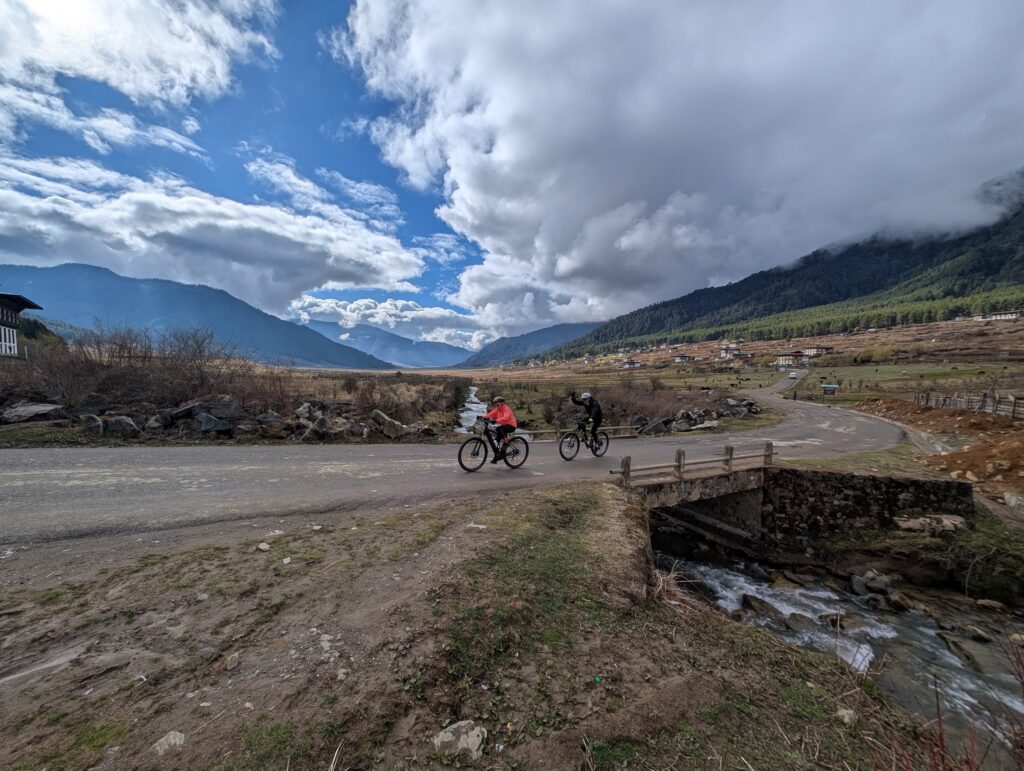
Over the past week, thirteen riders, a small local crew, and I have crossed Bhutan the hard way. We’ve climbed into thin air and descended for hours without turning a pedal. We’ve ridden through sunshine, rain and sleet, picked our way through mud, rolled past yaks blocking the road, and followed ribbons of tarmac that cling improbably to the sides of mountains.
Now, standing here, it feels like it’s all come together.
For me, it’s been a long time since my last visit. Fourteen years ago I led my first tours through
Bhutan. In the years since I’ve ridden all over the world, but this place never quite let go. Some destinations blur over time … Bhutan doesn’t.
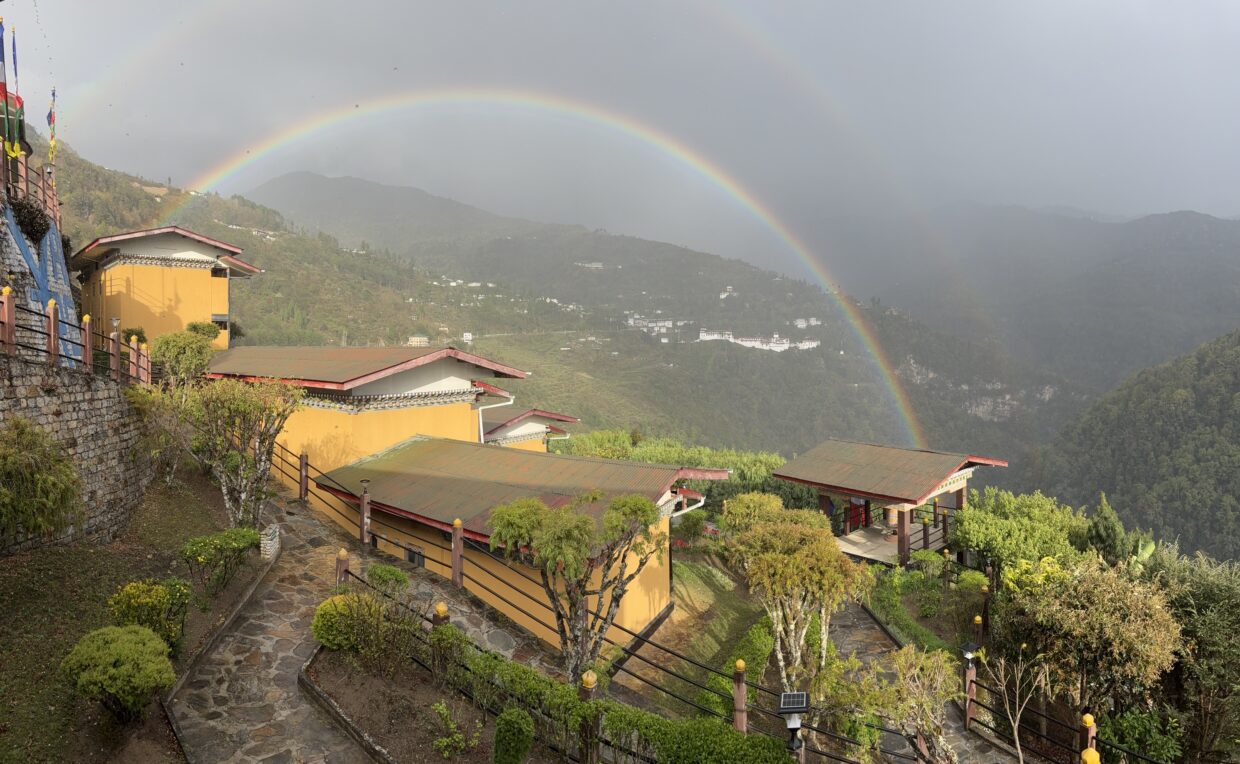
The adventure begins before you even set foot in the country. Flying into Paro, the plane threads its way through steep Himalayan valleys before dropping onto a narrow strip of tarmac. It’s a landing that demands your full attention.
And then, almost immediately, everything softens. The air feels cleaner, the noise fades, and the
mountains seem to absorb whatever urgency you arrived with.
We roll out the next morning on a gentle 35km ride through the Paro Valley, sitting at 2,300 metres. It’s an easy start, deliberately so. Even here, the altitude is noticeable. The pace is slow, and the group is still finding its shape.
Immersed In Local Life
That first day is less about distance and more about immersion. We stop to watch an archery match, Bhutan’s national sport, where arrows are fired at targets so distant you can only hear the target being hit. There’s cheering, laughter, even dancing. It feels more like a celebration than a competition.
Later, we’re invited into a local farmhouse. Sitting on the floor with cups of butter tea, we get a glimpse of daily life—self-sufficient, grounded, and deeply connected to tradition. In the shrine room, worn marks on the timber floor show where prostrations have been repeated thousands of times.
It’s not a performance for visitors, it’s daily life. By the time we leave Paro and ride toward Thimphu, the group has started to settle. The
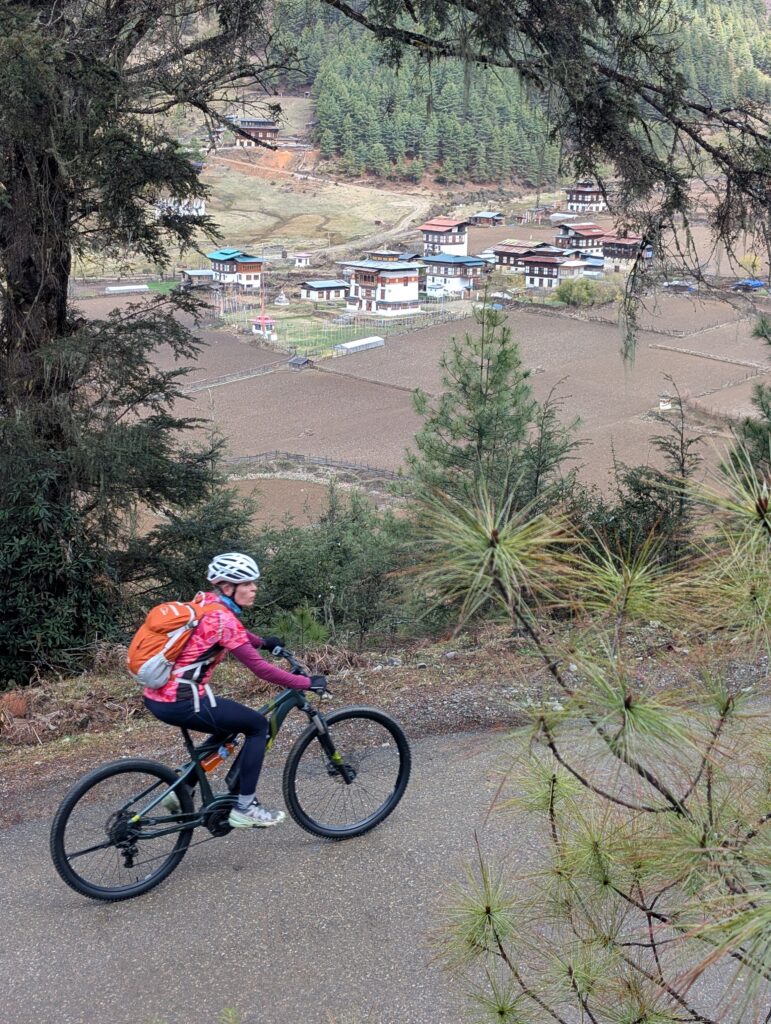
early nerves fade quickly. The rhythm takes over.The 55km ride is along what I call “Bhutanese flat” —which is never flat, just a series of gentle rises and falls as the road follows the river valleys.
The mountains are always there, rising steeply on either side, reminding us that the real work is still to come. That work begins in earnest the following day on the climb to Dochula Pass.
Sixteen kilometres of steady uphill, gaining height with every turn. The air thins, the effort deepens, and the group stretches out along the road. At 3,050 metres, it’s the first real test.
There are no views at the top today, just clouds and cold air. But no one is disappointed. Because getting there under your own power is enough.
From the pass, the road drops away for 42 kilometres to Punakha. It’s the kind of descent that feels endless—hands working the brakes, eyes scanning the road, the landscape gradually revealing itself as we drop out of the cloud and into warmer air.
In Punakha, we take a breath. A shorter 30km ride through the valley follows quiet roads between rice terraces and farmhouses, the river moving steadily beside us. We cross a pedestrian suspension bridge that stretches 180cm across the valley, high above the river.
It’s a different kind of riding—less about effort, more about presence.
Then comes the day that defines the journey. Eighty-two kilometres, two high passes, and a finish that demands everything the riders have left.
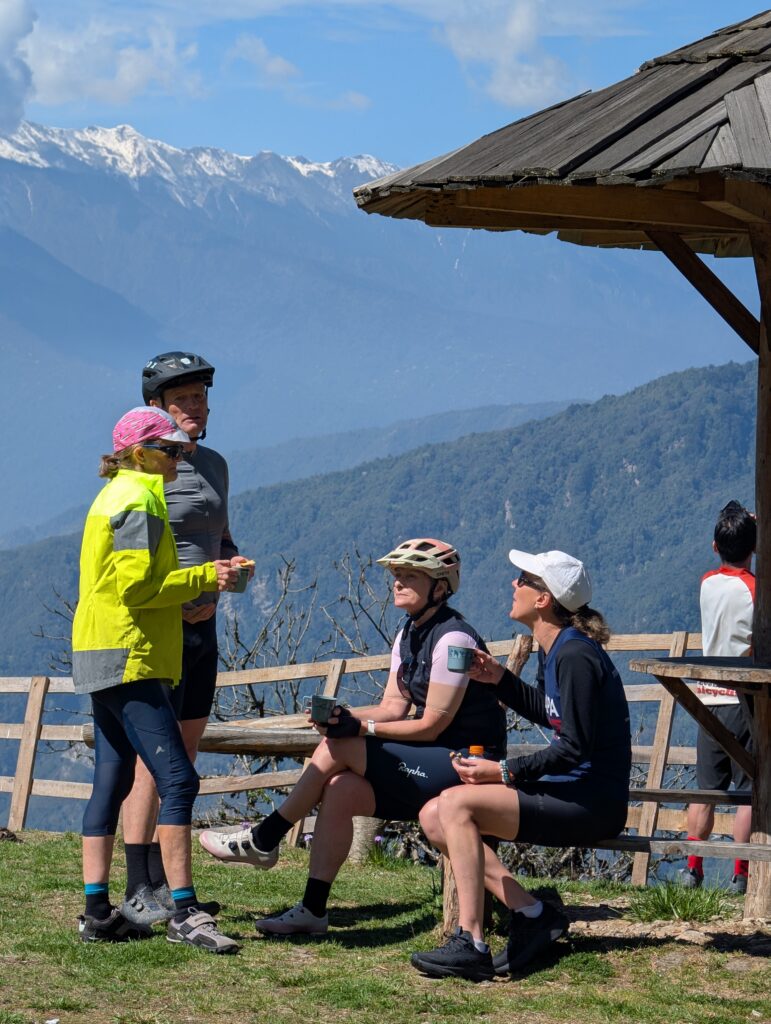
We leave the Phobjikha Valley early, the morning light soft across an already dreamlike landscape. The first climb rises steadily toward Lawala Pass, the final kilometres rough and muddy from roadworks. It’s slow, careful riding, but everyone makes it through.
Climbing Higher & Higher
There’s barely time to recover before the second climb begins.
Pelela Pass (3390m) sits higher, the air is thinner and the effort is heavier. Even with e-bikes assisting much of the group, no one is finding it easy. For the guiding team, riding unassisted, it’s a sustained grind just to keep pace.
And then, finally, the reward, a 25-kilometre descent that seems to fall forever. The road sweeps down through vast, open mountains, the scale almost impossible to take in. It’s fast enough to be exhilarating, open enough to look up and realise just how small you are in it all.
Halfway down, three yaks stand in the middle of the road. We’ve seen plenty of yaks by now so it all seems routine, until it isn’t.
A passing car startles them, and suddenly they’re charging downhill straight toward me.
What follows is a quick retreat to the edge of the road. Later, the video I was taking at the time, replays perfectly: calm, composed, then complete chaos. It becomes one of those stories that defines a trip. Because it’s not just effort and scenery, but the moments in between.
The following day reminds us who’s in charge. We climb for 30 kilometres into mist toward the highest pass of the tour, Yutong La at 3,425 metres. The world narrows to a strip of wet road, the forest barely visible through the clouds.
It’s a long, steady effort, the kind that requires patience and endurance more than strength.
At the top it’s freezing cold, then the weather closes in. Sleet begins to fall. The wind picks up. Visibility drops to almost nothing.
The descent ahead is narrow, winding, and exposed. It’s a decision no tour leader wants to make—but the only one that makes sense. I pull us off the road.
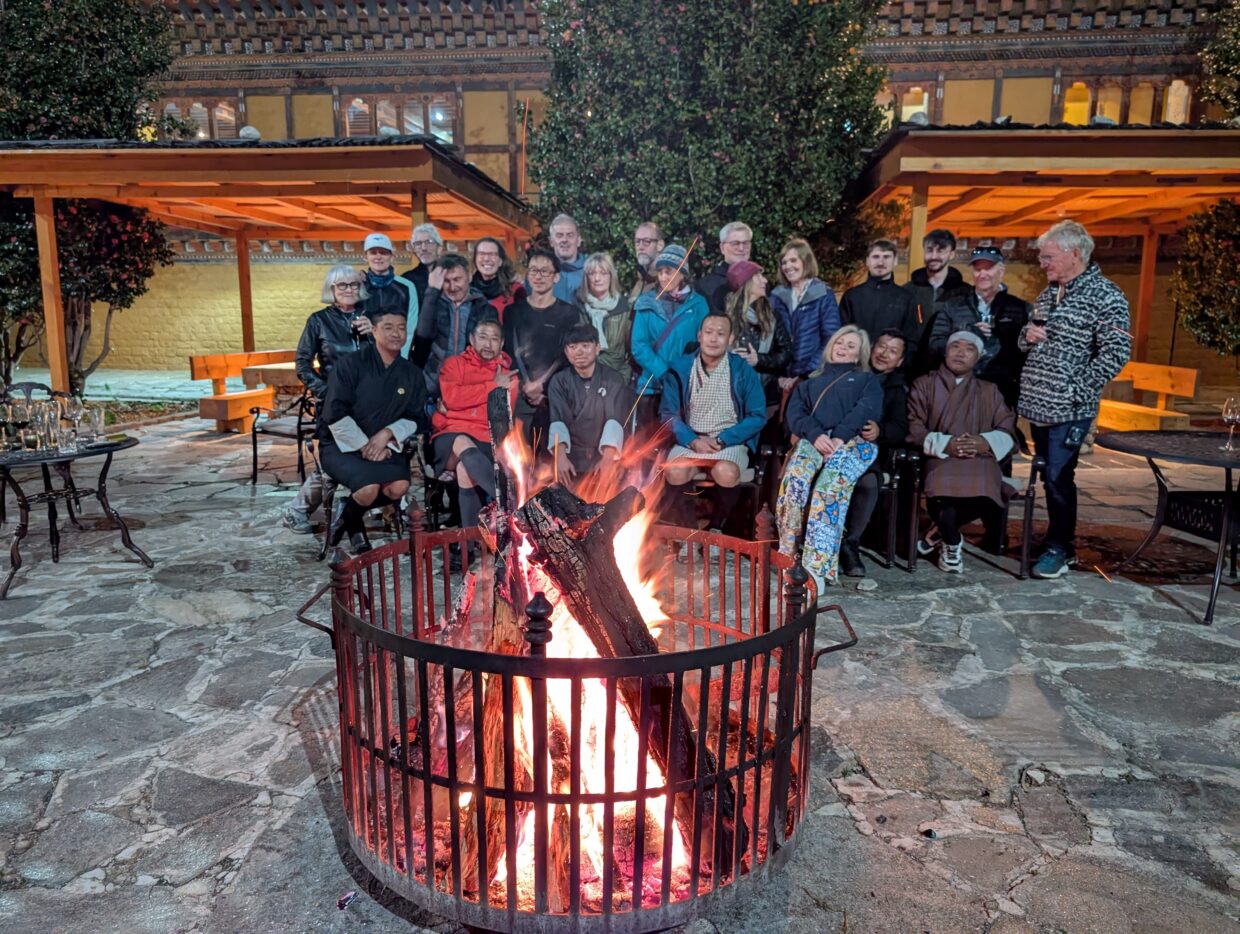
There’s no argument, no resistance. The mountains have made the call for us. By the time we reach lunch, the storm has passed. A fire burns in the courtyard, local home brew alcohol called ara is poured, and the mood resets as quickly as it shifted. Later, we’re back on the bikes, climbing once more.
And that’s how we find ourselves at Kikila tying prayer flags into the wind. Back in Paro, on our final day, we leave the bikes behind and set out on foot toward Tiger’s Nest Monastery, Bhutan’s most iconic site.
Clinging to a sheer cliff face high above the valley, it’s a place that seems impossible, even when you’re standing beneath it. The climb is steady and unrelenting. But after a week of riding, it feels familiar. Steps replace pedal strokes, but the rhythm is the same—settle in, breathe, keep moving.
As we climb higher, the monastery reveals itself in glimpses, appearing through the trees before disappearing again. It’s only near the end that you fully grasp where it sits, suspended between rock and sky.
We arrive not as individuals, but as a group that has shared something special. Over the past eleven days, we’ve climbed together, descended together, and adapted when things didn’t go to plan, laughed, sang songs, and found a rhythm that only comes from moving through a place under your own power.
Standing there, looking out across the valley, it’s clear Bhutan isn’t just a destination — it’s a feeling. It’s something we’ve moved through, and something that’s moved with us, carried on the air we breathe. And long after the legs have recovered, that’s what stays with you.

Logistics
When to go: Spring and Autumn are the prime seasons for visiting. March to May for rhododendrons and cool, sometimes wet days. September to November typically offers clear days and the best chance to see the highest mountains.
How to get there: Bhutan operates a closed tourism market where all travellers must join a
package tour in order to visit. There is a US$100/night tourism fee charged per person that will be included in the cost of your tour. Drukair flies daily from Bangkok and Delhi as well as 3 days a week from Singapore.
Your Tour options: Pedal Pedal is the only Australian company operating bicycle tours in Bhutan with 1-2 tours a year (pedalpedal.com.au). E-bikes are available.
What to take: High mountain weather is unpredictable so pack for all types of weather, including full waterproofs for rainy days, as well as warm weather clothing for the sub-tropics in Punakha.
For more about cycling Bhutan visit https://pedalpedal.com.au