Salsa Cutthroat Gravel & Adventure Bike Tested

A cross between a mountain bike and a roadie, the Salsa Cutthroat continues to hold its place as one of the most versatile adventure rigs on the market.
Part cult classic, part ultra-endurance machine, this carbon workhorse was originally developed for the legendary Tour Divide and hasn’t strayed far from that purpose.
Since its debut in 2015, the Cutthroat has remained largely unchanged – it has been subtly refined over the years rather than completely reinvented.
The 2025 model is no exception, building on the bike’s legacy with subtle yet meaningful updates: UDH compatibility for SRAM’s latest transmission drivetrains, and a revised fork with a full carbon steerer that Salsa say is 32% more compliant than before.
There’s also upgraded abrasion-resistant plates to keep the frame protected from the elements, and a range of different paint options.
The fork includes internal routing brake lines and dynamo wiring, with many owners opting for Son-style front hub power generators. There are also a range of mounting points on the fork to further reinforce the bike’s adventure-ready credentials.
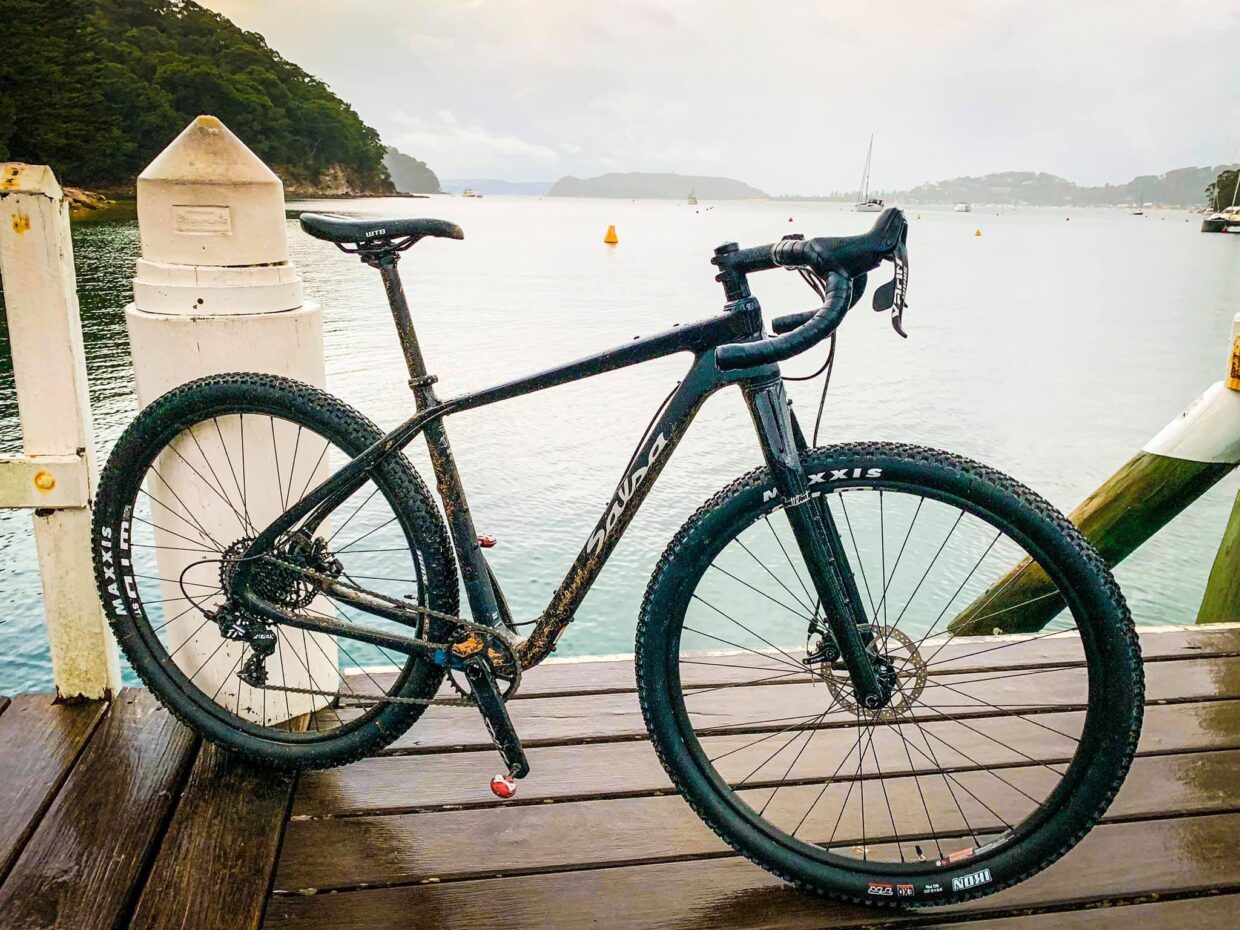
More like a drop bar cross-country MTB than pure gravel bike, the Cutthroat is built for all-day, all-weather exploration. It features 29-inch wheels, clearance for up to 2.4” tyres in the rear and 3.0” up front, flat-mount brakes, and a myriad of mounting points to suit every possible gear configuration.

Salsa now also offer an internal frame bag for a cleaner bike packing setup, while the geometry – long, stable, and forgiving – has been designed for endurance over efficiency.
Out on the road, the Cutthroat performs exactly as advertised. Faced with wind, rain, and low teen temperatures on the test ride, it came into its own. The Maxxis rubber rolled smoothly on the local tarmac, humming confidently as I shivered through the ride.
Initially test riding the bike on a mix of local trails and smooth bitumen, the idea being to get a feel of the Cutthroat’s all-round (and all-road) abilities. Off road it felt and performed much like a medium to high-end XC MTB – ‘like mountain biking with drop bars’ I thought.

The riding position is upright and surprisingly comfortable. At around 11.5 kilograms the bike is a lot heavier than a road or gravel bike, but a similar weight to many of those aforementioned mid to high-end cross country MTBs.
Gearing manages and alleviates that extra weight, the test bike fitted with a SRAM 38t chainring and 11- 42T cassette.
That gearing massively helped on the various steep climbs during the test ride, and once I arrived at the longer, flatter sections, the bike hummed along with a purposeful and unfussy manner.

Post ride impressions were that the Cutthroat is ideal for long, gear-laden days when reliability and the journey are the more important aspects of the ride.
This is not a bike for the KOM crowd. It’s a steady cruiser – one that encourages rhythm over bursts and persistence over pace. Whether on blacktop bitumen or gravel, the Cutthroat ate up the test kilometres and felt like it wanted to just keep going.
In summary, it’s not a rocket ship but a purposeful, predictable and composed bike to ride. The Cutthroat is all about adventure – the frameset and build inspire confidence, and there are bikepacker-friendly touches everywhere.

Starting at around $6,500 for a Shimano 12sp GRX-equipped model, and ranging up to $8,900 for the top model fitted with Apex Eagle AXS, it’s not inexpensive. But given the respected model’s capability, durability and comfort, it offers real value to serious adventure cyclists – plus priceless memories.
As Aussie distributor Stuart Voysey of SCV imports puts it, “This bike is for the rider who really wants adventure.” And it’s hard to argue with that.
To find your nearest Salsa dealer visit www.scvimports.com.au